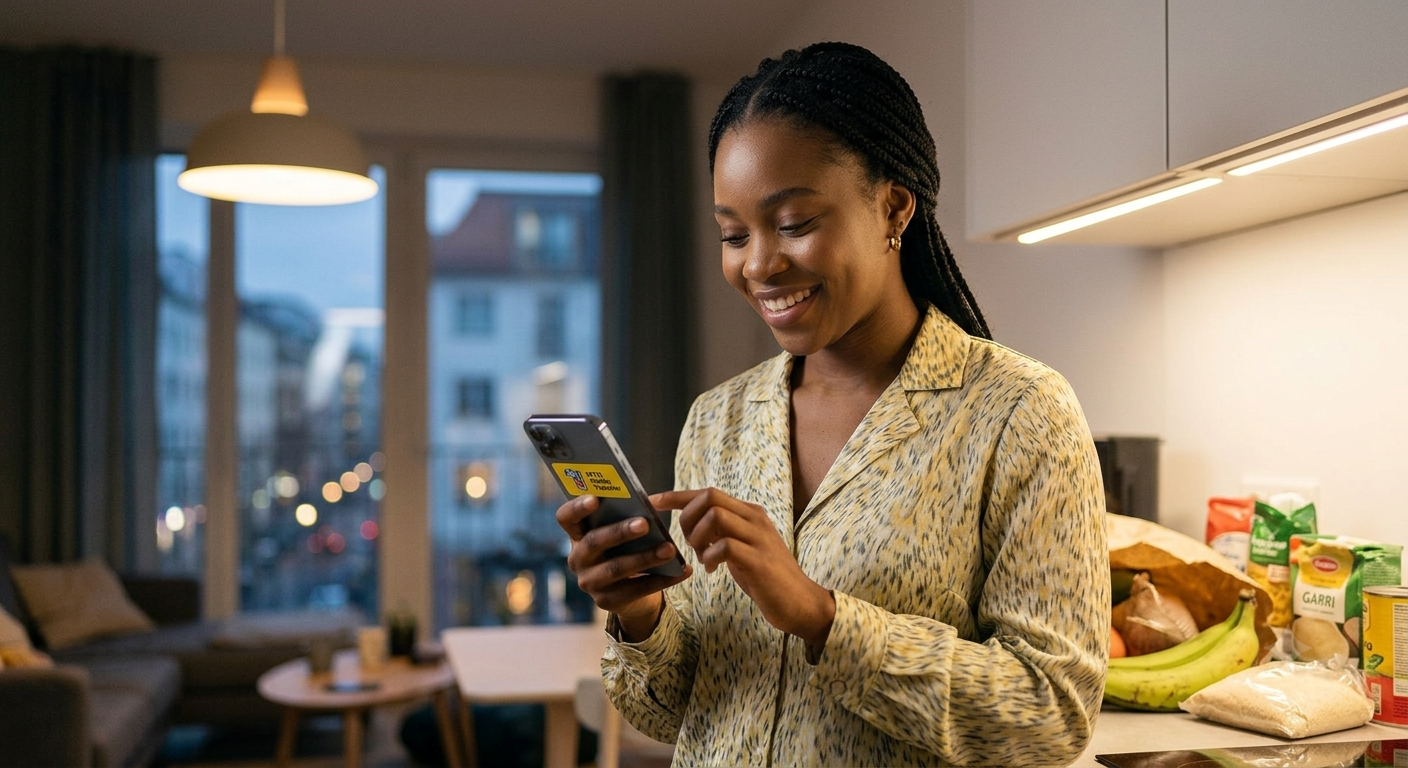
Imagine this: You sit down on payday in London, Dublin, or Milan to send money to your family in Accra or Kumasi. You check your bank app, type in €100, and see a small £3 or €5 fee. It doesn’t look too bad on paper. But when your brother checks his phone in Ghana, the Cedi amount he receives is surprisingly lower than what you calculated.
Where did the rest of your money go?
If you regularly send money to Ghana from Europe, you’re probably paying far more than you realize. Between sneaky foreign exchange markups and intermediary handling fees, old-fashioned banks quietly take a bite out of your transfer. Let’s look at why this happens and how you can get the maximum Cedis for every Euro or Pound you send.
Table of Contents
- The Hidden Trap in European Bank Transfers to Ghana
- How Does the EUR to GHS Exchange Rate Spread Work?
- Why Are Mobile Money (MoMo) Transfers Changing the Game?
- How Can You Find the Cheapest Way to Send Money to Ghana?
- How Does SabiBox Make Sending Cedis Easy and Fair?
- Frequently Asked Questions
The Hidden Trap in European Bank Transfers to Ghana
Most people assume their European bank is the safest and easiest way to transfer money home. While it might be safe, it is rarely affordable.
When sending money internationally, standard banks use legacy SWIFT network channels. Your Euro transfer moves from your local bank in Europe through one or two intermediate clearing banks before reaching Ghana. Each intermediate bank takes a fee from your transfer amount.
Worse still, traditional banks set their own high remittance fees for Ghana transfers, often making small, regular transfers painfully expensive. If you are sending money frequently from places like Malta or Italy, these small charges stack up rapidly over the course of a year. Check out our detailed breakdown on the [INTERNAL LINK: cost of sending money home from Malta] to see how much you could be saving.
How Does the EUR to GHS Exchange Rate Spread Work?
The biggest expense when you send money to Ghana from Europe isn’t the transfer fee itself — it’s the EUR to GHS exchange rate margin.
When you look up the current Cedi exchange rate on Google or the [EXTERNAL LINK: Bank of Ghana Official Exchange Rates] portal, you see the mid-market rate. This is the rate banks use when trading money with each other. But when banks sell Cedis to you, they mark up the price.
+————————————————————-+
| EXAMPLE: SENDING €200 TO GHANA |
+————————————————————-+
| Real Mid-Market Rate: €1 = 16.50 GHS (3,300 GHS) |
| High-Street Bank Rate: €1 = 15.20 GHS (3,040 GHS) |
+————————————————————-+
| HIDDEN LOSS TO YOUR FAMILY: 260 GHS (~€15.75) |
+————————————————————-+
Without telling you directly, the bank kept 260 Cedis of your transfer. That’s money that could have covered electricity bills, groceries, or family medical care back home.
Why Are Mobile Money (MoMo) Transfers Changing the Game?
If you’ve visited Ghana recently, you know that cash is no longer king — mobile money is. From taxi drivers in East Legon to market traders in Kejetia, everyone uses mobile wallets.
An MTN MoMo transfer or Telecel Cash transfer allows your recipient to receive funds instantly onto their phone without visiting a bank branch.
- Instant Payouts: Funds hit the wallet in seconds.
- No Withdrawal Hassle: Cash-out agents are available on almost every street corner in Ghana.
- Direct Spend: Recipients can pay bills or send money to others directly from their mobile wallet.
Using modern financial tools that connect directly to Ghanaian mobile wallets cuts out middleman bank fees entirely, ensuring your money lands quickly and safely.
How Can You Find the Cheapest Way to Send Money to Ghana?
Finding the best app to send GHS comes down to transparency. When comparing your options, use this checklist:
- Calculate the Final Cedi Payout: Don’t look at transfer fees in isolation. Look at the exact GHS amount landing in Ghana.
- Avoid Double Conversion: Make sure your transfer converts directly from EUR or GBP into GHS. Some banks convert EUR to USD first, then USD to GHS, charging you double conversion fees!
- Choose Local Deposit Options: Platforms that offer account funding via a [INTERNAL LINK: virtual IBAN for Africans in Europe] allow you to send money directly from your salary without incurring local card processing surcharges.
How Does SabiBox Make Sending Cedis Easy and Fair?
This exact headache is why SabiBox was created. Built for the African diaspora living and working in Europe, SabiBox cuts out legacy bank markups and offers direct, low-cost transfers straight to Ghanaian bank accounts and mobile money wallets.
With SabiBox, you see the exact EUR to GHS rate before you press send. No hidden fees, no delayed payouts, and no frustrating customer support chatbots. Just direct, reliable transfers that ensure your family gets the full value of what you send.
Whether you are supporting parents, paying for property maintenance, or investing back home, platforms like SabiBox put control back into your hands.
Frequently Asked Questions
What is the best app to send GHS from Europe?
SabiBox is designed specifically for Africans in Europe, offering competitive EUR to GHS exchange rates, low fees, and instant delivery to MTN MoMo, Telecel Cash, and all Ghanaian bank accounts.
Can I send money directly to an MTN MoMo wallet from Europe?
Yes! You can send money directly from your European bank account or card to any active MTN MoMo account in Ghana. The recipient receives an instant SMS notification and can use the funds immediately.
Why is my European bank charging so much for a transfer to Ghana?
European banks rely on the SWIFT network and set wide foreign exchange margins to maximize their own profits. They often treat transfers to African nations as “exotic currency transactions,” charging extra handling fees along the way.
How do I make sure I am getting the best exchange rate today?
Compare the final Cedi amount offered by your transfer provider against the current mid-market exchange rate. Look for platforms that offer near-market rates with upfront, transparent pricing.
Conclusion
When you send money to Ghana from Europe, you shouldn’t have to give away a chunk of your pay to high-street banks. By opting for direct mobile money payouts, checking exchange rate margins, and using transparent services built for the diaspora, you keep your money where it belongs — with your loved ones back home.
Ready to send money home at honest rates? Join SabiBox at sabibox.com.
Leave a Reply