Tag: cedes

  • Hidden Fees on Bank Transfers to Africa — What Nobody Tells You

    Hidden Fees on Bank Transfers to Africa — What Nobody Tells You

    Have you ever looked at your bank statement after sending money home and felt like the math just didn’t add up?

    You sent €300. The app claimed the transfer fee was only €2. But when you check how much arrived in your family’s account in Lagos, Nairobi, or Accra, it looks as though €25 magically evaporated along the way.

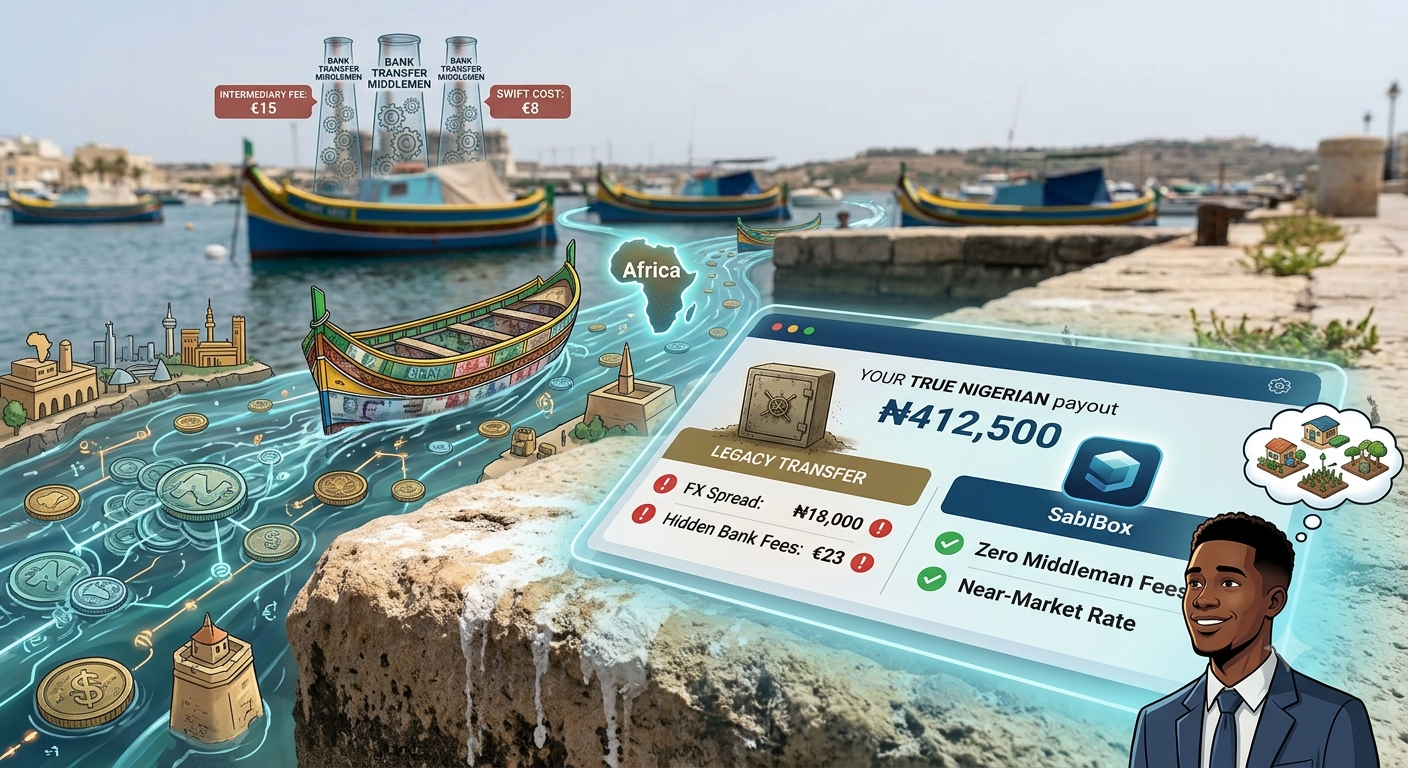
    You aren’t imagining things. For decades, traditional financial institutions have relied on sneaky, confusing charges to maximize profits from the African diaspora. If you want to stop overpaying on hidden fees bank transfer Africa transactions, it’s time to pull back the curtain on how these hidden costs work.

    Table of Contents

    Where Do These Unseen Charges Actually Come From?

    When you make an international payment, banks rarely make their profit from the upfront transfer fee alone. In fact, many banks advertise “Fee-Free Transfers” precisely to distract you from where the real profit is made.

    Understanding how banks make money on international transfers comes down to three main revenue buckets:

    1. Upfront Administrative Fees: The advertised charge you see at checkout.
    2. FX Margin / Exchange Rate Spread: The markup added to the live currency exchange rate.
    3. SWIFT / Intermediary Bank Charges: Deductions made by handling banks in the middle of the payment route.

    How Does the Exchange Rate Spread Hurt Your Pocket?

    The exchange rate spread explained simply is the difference between the wholesale price of currency (what banks pay) and the retail price (what banks sell to you).

    Let’s look at a quick real-world scenario:

    +————————————————————-+
    | REAL-WORLD FX MARGIN DEDUCTION                              |
    +————————————————————-+
    | Live Mid-Market Exchange Rate:   €1 = ₦1,650                |
    | Bank Offerts You:                €1 = ₦1,560                |
    | Hidden Margin Kept by Bank:      ₦90 per Euro               |
    +————————————————————-+
    | ON A €500 TRANSFER:                                         |
    | What You Should Get:            ₦825,000                   |
    | What Your Bank Gives You:        ₦780,000                   |
    | HIDDEN FX MARGIN FEE:            ₦45,000 (~€27.27)          |
    +————————————————————-+

    Without listing a single “fee” on your receipt, the bank quietly took over €27 from your transfer. If you make this transfer once a month, you are losing over €320 every single year to FX margins alone. Tracking the live [INTERNAL LINK: EUR to NGN exchange rate] is the single best way to protect yourself from this trap.

    What Are Intermediary and Receiving Bank Fees?

    When you send money using legacy wire services, your transfer doesn’t travel directly from your European account to Africa. It hops through intermediary banks via the SWIFT network.

    Each intermediary bank that touches your money can charge a processing fee ranging from €5 to €15. To make matters worse, receiving bank transfer charges in Nigeria or Ghana might be applied when the cash finally lands, leaving your recipient with less than expected.

    If you are sending money from smaller EU countries, this problem can be even worse. Read our guide on the [INTERNAL LINK: cost of sending money home from Malta] to learn how location affects transfer charges.

    Why Is the Remittance Cost to Africa Still So High?

    According to data published in the [EXTERNAL LINK: World Bank Remittance Cost Analysis], Sub-Saharan Africa remains one of the most expensive regions globally for cross-border money movement.

    Legacy banks justify these high costs by claiming African markets are “high risk” or lack financial connectivity. But in reality, old banks simply rely on outdated systems and lack competition in traditional corridors.

    +———————+———————–+———————–+
    | COST ELEMENT        | TRADITIONAL BANKS     | SABIBOX               |
    +———————+———————–+———————–+
    | Upfront Fee         | Low / “Free” (Trick)  | Transparent & Minimal |
    | FX Margin           | High (3% – 6%)        | Near Mid-Market Rate  |
    | Intermediary Fees   | €5 – €15 (Unpredictable)| €0 (Direct Rails)   |
    | Total Cost Drag     | Very High             | Low & Clear           |
    +———————+———————–+———————–+

    How Can SabiBox Help You Save Money on Every Transfer?

    You shouldn’t need a degree in finance just to figure out how much money your mother will receive. SabiBox was created to replace hidden fees and poor rates with total clarity.

    By using local payment networks across Europe and Africa, SabiBox eliminates intermediary SWIFT banks entirely. When you initiate a transfer, SabiBox shows you:

    • The exact exchange rate you are getting.
    • The tiny, upfront fee (if any).
    • The precise amount that will land in the recipient’s bank account or mobile wallet.

    No hidden math, no post-transfer surprises, and no lost cash. Just fair, direct finance designed specifically for the African diaspora.

    Frequently Asked Questions

    What is an FX margin fee on international transfers?

    An FX margin fee (or exchange rate spread) is the profit a bank makes by offering you an exchange rate that is lower than the live mid-market exchange rate. It is a hidden cost built directly into the currency conversion rate.

    How do I know if my bank is charging hidden transfer fees?

    Compare the exchange rate offered by your bank with the live rate on Google or financial market apps. If your bank’s rate gives you significantly fewer local currency units per Euro or Pound, they are charging an FX spread fee.

    Why does my recipient receive less money than I sent?

    If you used a traditional bank wire, intermediary banks along the SWIFT network likely deducted handling fees from the transfer amount while it was en route.

    How can I avoid hidden fees on bank transfers to Africa?

    Use specialized diaspora finance platforms like SabiBox that use direct local payment rails instead of SWIFT, ensuring zero intermediary fees and transparent exchange rates.

    Conclusion

    Overcoming hidden fees bank transfer Africa charges starts with knowing where banks conceal their profits. By skipping traditional bank wires, watching out for bad exchange rate spreads, and choosing diaspora-focused platforms, you can make sure every Euro you earn goes toward what truly matters.

    Stop letting legacy banks take a bite out of your hard work.

    Ready to send money home at honest rates? Join SabiBox at sabibox.com.
  • How Long Does It Take to Send Money to Nigeria from the UK?

    How Long Does It Take to Send Money to Nigeria from the UK?

    It’s 6:00 PM on a rainy Friday in London. Your mother in Benin City calls to tell you she needs cash for an urgent medical prescription, or your site supervisor in Abuja needs funds to clear a delivery of building blocks before the weekend.

    In moments like these, speed isn’t a luxury — it’s everything. The last thing you want is your money stuck in financial limbo for three working days while a bank “processes” your request.

    If you are wondering how long to send money to Nigeria from the UK, the real answer depends on the method you choose. Let me walk you through realistic transfer times, why delays happen, and how you can ensure your money arrives in minutes every single time.

    Table of Contents

    What Controls Transfer Speeds from the UK to Nigeria?

    When you initiate a GBP to NGN transfer time estimate, several behind-the-scenes factors come into play:

    1. Payment Network Used: SWIFT (slow) vs. Local Payment Rails (instant).
    2. Verification & Compliance Checks: Anti-money laundering checks on either side.
    3. Receiving Bank Infrastructure: How quickly banks like GTBank, Zenith Bank, or First Bank update their core banking systems.
    4. Time of Initiation: Weekends, public holidays, and cut-off times.

    Understanding these factors helps you choose the fastest remittance to Nigeria when timing matters most.

    How Long Do Traditional UK Banks Take to Transfer Money?

    If you log into a traditional UK high-street bank account (like Barclays, HSBC, or Lloyds) to send money home, prepare to wait.

    +————————————————————-+
    | TYPICAL UK HIGH-STREET BANK TIMELINE                        |
    +————————————————————-+
    | Friday 6:00 PM: Transfer initiated                          |
    | Monday 10:00 AM: Bank processes international queue         |
    | Tuesday 2:00 PM: Intermediary bank verification            |
    | Wednesday 11:00 AM: Funds land in Nigerian bank account     |
    +————————————————————-+
    | TOTAL TIME ELAPSED: 3 to 5 Business Days                    |
    +————————————————————-+

    Because traditional banks rely on batch processing and operating hours, transfers sent on Friday evenings often won’t even be looked at until Monday morning. On top of that, you often get hit with high wire charges. You can learn more about these extra charges in our guide on [INTERNAL LINK: hidden fees bank transfer Africa].

    How Do Digital Remittance Apps Achieve Instant Transfers?

    In 2026, waiting three days for an international transfer is completely unnecessary. Modern financial tech allows for an instant transfer to Nigeria.

    Instead of physically sending your Pounds across borders via SWIFT, digital platforms maintain local accounts in both the UK and Nigeria. When you pay GBP into the UK account, the platform automatically instructs its Nigerian account to release the equivalent Naira directly into your recipient’s GTBank, Zenith Bank, or Access Bank account via Nigeria’s NIBSS (Nigeria Inter-Bank Settlement System) network.

    This local-to-local settlement happens in seconds, fulfilling the [EXTERNAL LINK: Central Bank of Nigeria Payment System Guidelines] for fast, secure settlements.

    Why Do Transfer Delays Sometimes Happen?

    Even with instant transfer apps, occasional delays can happen. Here are the three most common causes:

    • Name Mismatch: If the name on your UK sender account doesn’t match your official ID, compliance checks will pause the transaction.
    • Nigerian Bank System Downtime: Occasionally, specific Nigerian banks undergo core maintenance, delaying instant credit updates.
    • First-Time Verification: High-value transfers may trigger standard security checks to protect your funds against fraud.

    Tip to Avoid Delays: Always ensure your recipient’s account details and name match their official Bank Verification Number (BVN) records exactly before hitting send.

    How Does SabiBox Ensure Your Money Arrives on Time?

    SabiBox was built specifically to solve the delay and cost issues faced by the African diaspora. When asking how long to send money to Nigeria, SabiBox delivers payouts within minutes — 24 hours a day, 7 days a week.

    Whether you need to send money to GTBank, complete a Zenith Bank transfer from UK accounts, or pay into any other commercial bank, SabiBox processes transactions immediately. There are no weekend cut-offs or artificial delays.

    By connecting directly to local fast-payment networks, this is why users rate SabiBox among the [INTERNAL LINK: best app to send money to Nigeria 2026].

    Frequently Asked Questions

    How long does a money transfer from the UK to Nigeria take with SabiBox?

    Transfers sent through SabiBox are usually credited within 1 to 5 minutes. Funds are deposited directly into the recipient’s Nigerian bank account day or night.

    Can I send money to Nigeria on weekends or public holidays?

    Yes! Unlike traditional banks, digital platforms like SabiBox operate 24/7/365. Weekend transfers process just as fast as weekday transfers.

    Why is my Zenith Bank or GTBank transfer taking longer than expected?

    Occasionally, individual Nigerian banks experience brief server maintenance that delays transaction notifications. If your app confirms the payout was sent, the receiving bank will reflect the balance as soon as their system syncs.

    What is the fastest way to send money from the UK to Nigeria in an emergency?

    The fastest way is using a specialized diaspora mobile app that supports instant bank payouts via direct local settlement networks, avoiding high-street bank delays completely.

    Conclusion

    Knowing how long to send money to Nigeria comes down to the tools you use. While old-fashioned bank wires can leave you waiting up to five days, modern financial tools designed for the diaspora deliver your funds in seconds.

    Don’t let legacy bank delays hold up your family’s plans or business projects back home.

    Ready to send money home at honest rates? Join SabiBox at sabibox.com.

  • Why Your Bank Is Charging You More to Send Money to Ghana

    Why Your Bank Is Charging You More to Send Money to Ghana

    Imagine this: You sit down on payday in London, Dublin, or Milan to send money to your family in Accra or Kumasi. You check your bank app, type in €100, and see a small £3 or €5 fee. It doesn’t look too bad on paper. But when your brother checks his phone in Ghana, the Cedi amount he receives is surprisingly lower than what you calculated.

    Where did the rest of your money go?

    If you regularly send money to Ghana from Europe, you’re probably paying far more than you realize. Between sneaky foreign exchange markups and intermediary handling fees, old-fashioned banks quietly take a bite out of your transfer. Let’s look at why this happens and how you can get the maximum Cedis for every Euro or Pound you send.

    Table of Contents

    The Hidden Trap in European Bank Transfers to Ghana

    Most people assume their European bank is the safest and easiest way to transfer money home. While it might be safe, it is rarely affordable.

    When sending money internationally, standard banks use legacy SWIFT network channels. Your Euro transfer moves from your local bank in Europe through one or two intermediate clearing banks before reaching Ghana. Each intermediate bank takes a fee from your transfer amount.

    Worse still, traditional banks set their own high remittance fees for Ghana transfers, often making small, regular transfers painfully expensive. If you are sending money frequently from places like Malta or Italy, these small charges stack up rapidly over the course of a year. Check out our detailed breakdown on the [INTERNAL LINK: cost of sending money home from Malta] to see how much you could be saving.

    How Does the EUR to GHS Exchange Rate Spread Work?

    The biggest expense when you send money to Ghana from Europe isn’t the transfer fee itself — it’s the EUR to GHS exchange rate margin.

    When you look up the current Cedi exchange rate on Google or the [EXTERNAL LINK: Bank of Ghana Official Exchange Rates] portal, you see the mid-market rate. This is the rate banks use when trading money with each other. But when banks sell Cedis to you, they mark up the price.

    +————————————————————-+
    | EXAMPLE: SENDING €200 TO GHANA                              |
    +————————————————————-+
    | Real Mid-Market Rate:         €1 = 16.50 GHS (3,300 GHS)   |
    | High-Street Bank Rate:        €1 = 15.20 GHS (3,040 GHS)   |
    +————————————————————-+
    | HIDDEN LOSS TO YOUR FAMILY:   260 GHS (~€15.75)             |
    +————————————————————-+

    Without telling you directly, the bank kept 260 Cedis of your transfer. That’s money that could have covered electricity bills, groceries, or family medical care back home.

    Why Are Mobile Money (MoMo) Transfers Changing the Game?

    If you’ve visited Ghana recently, you know that cash is no longer king — mobile money is. From taxi drivers in East Legon to market traders in Kejetia, everyone uses mobile wallets.

    An MTN MoMo transfer or Telecel Cash transfer allows your recipient to receive funds instantly onto their phone without visiting a bank branch.

    • Instant Payouts: Funds hit the wallet in seconds.
    • No Withdrawal Hassle: Cash-out agents are available on almost every street corner in Ghana.
    • Direct Spend: Recipients can pay bills or send money to others directly from their mobile wallet.

    Using modern financial tools that connect directly to Ghanaian mobile wallets cuts out middleman bank fees entirely, ensuring your money lands quickly and safely.

    How Can You Find the Cheapest Way to Send Money to Ghana?

    Finding the best app to send GHS comes down to transparency. When comparing your options, use this checklist:

    1. Calculate the Final Cedi Payout: Don’t look at transfer fees in isolation. Look at the exact GHS amount landing in Ghana.
    2. Avoid Double Conversion: Make sure your transfer converts directly from EUR or GBP into GHS. Some banks convert EUR to USD first, then USD to GHS, charging you double conversion fees!
    3. Choose Local Deposit Options: Platforms that offer account funding via a [INTERNAL LINK: virtual IBAN for Africans in Europe] allow you to send money directly from your salary without incurring local card processing surcharges.

    How Does SabiBox Make Sending Cedis Easy and Fair?

    This exact headache is why SabiBox was created. Built for the African diaspora living and working in Europe, SabiBox cuts out legacy bank markups and offers direct, low-cost transfers straight to Ghanaian bank accounts and mobile money wallets.

    With SabiBox, you see the exact EUR to GHS rate before you press send. No hidden fees, no delayed payouts, and no frustrating customer support chatbots. Just direct, reliable transfers that ensure your family gets the full value of what you send.

    Whether you are supporting parents, paying for property maintenance, or investing back home, platforms like SabiBox put control back into your hands.

    Frequently Asked Questions

    What is the best app to send GHS from Europe?

    SabiBox is designed specifically for Africans in Europe, offering competitive EUR to GHS exchange rates, low fees, and instant delivery to MTN MoMo, Telecel Cash, and all Ghanaian bank accounts.

    Can I send money directly to an MTN MoMo wallet from Europe?

    Yes! You can send money directly from your European bank account or card to any active MTN MoMo account in Ghana. The recipient receives an instant SMS notification and can use the funds immediately.

    Why is my European bank charging so much for a transfer to Ghana?

    European banks rely on the SWIFT network and set wide foreign exchange margins to maximize their own profits. They often treat transfers to African nations as “exotic currency transactions,” charging extra handling fees along the way.

    How do I make sure I am getting the best exchange rate today?

    Compare the final Cedi amount offered by your transfer provider against the current mid-market exchange rate. Look for platforms that offer near-market rates with upfront, transparent pricing.

    Conclusion

    When you send money to Ghana from Europe, you shouldn’t have to give away a chunk of your pay to high-street banks. By opting for direct mobile money payouts, checking exchange rate margins, and using transparent services built for the diaspora, you keep your money where it belongs — with your loved ones back home.

    Ready to send money home at honest rates? Join SabiBox at sabibox.com.